An Overview of UNC Wilmington (UNCW)

The University of North Carolina Wilmington is a public university on the North Carolina coast known for its strong marine science program and proximity to the beach. I visited UNCW on March 11, 2026, and came away with a great appreciation for what this coastal university offers students.
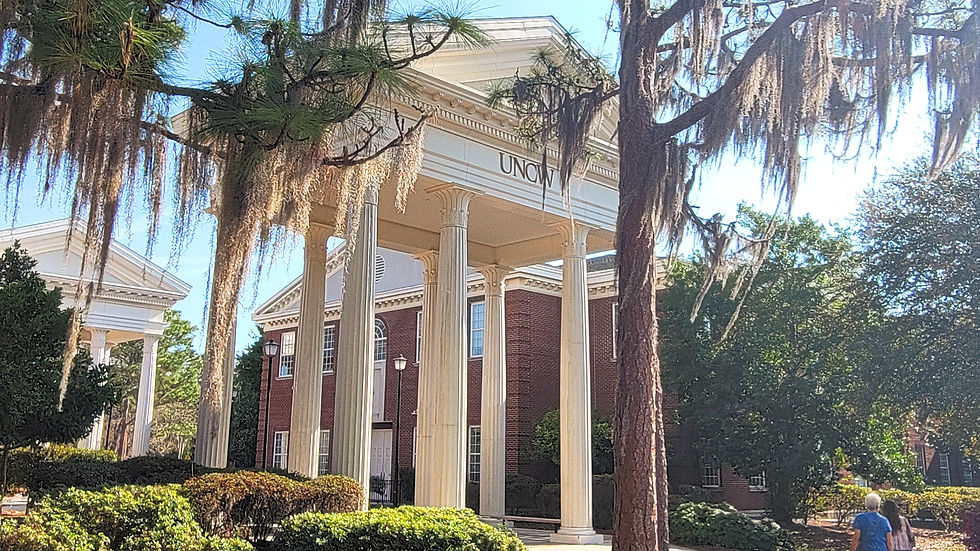
Location
UNCW is located in the coastal city of Wilmington, a community of roughly 125,000 residents on the southeastern coast of North Carolina. The location is one of the university’s biggest draws: the campus sits just five miles from the beach and five miles from the historic downtown riverwalk along the Cape Fear River. The Wilmington International Airport is only six miles away, making travel relatively convenient for out-of-state students.
The 650-acre campus is both attractive and easy to navigate. The campus features brick buildings in Georgian-style architecture, open lawns, several ponds, and a 10-acre forest. Because the campus is flat, students often travel by bike or skateboard, which contributes to the relaxed, outdoorsy feel of the university. Although the campus suffered damage during Hurricane Florence, the facilities now appear new and well-maintained.
The setting strongly influences the student culture. During my visit—on a warm 80-degree day—many students were wearing shorts and sandals, studying outside, sunbathing on lawns, or playing beach volleyball between classes.

Student Life
UNCW enrolls 16,131 undergraduate students and 3,764 graduate students, creating a campus environment that many students find appealing: large enough to offer strong academic and extracurricular opportunities, yet small enough that students can still build close communities.
Students are required to live on campus for their first two years, which helps new students develop friendships and become integrated into campus life. After that, most move to apartments in the surrounding Wilmington area.
Transportation on campus is convenient. Freshmen are allowed to bring cars, though many students find they do not need one. The campus Wave Transit buses circulate throughout the university, and students can also ride Wilmington’s public buses for free.
Campus safety measures are robust. Residence halls require students to scan their ID to enter, and guests must check in with identification at the front desk. UNCW also maintains its own campus police department and uses the Blue Light emergency phone system across campus. Students who feel unsafe walking alone at night can request a campus escort. My tour guide, who is a senior, said she has never felt the need to.
Although UNC Wilmington does not have a football team, it competes in NCAA Division I athletics (Coastal Athletic Association), and sports such as basketball, baseball, and soccer attract strong student attendance. Greek life includes roughly 10% of the student body.
Given the coastal location, outdoor recreation plays a major role in student life. UNCW’s Seahawk Adventures program organizes activities such as surfing clinics, hiking trips, and camping excursions. The program also rents equipment—such as surfboards—to students at subsidized rates, making it easier to take advantage of the nearby beaches.

Academics
UNCW offers 60 undergraduate majors across five colleges:
College of Humanities, Social Sciences, and the Arts
College of Science and Engineering
Cameron School of Business
Watson College of Education
College of Health and Human Services
School of Health and Applied Human Sciences
School of Nursing
School of Social Work
The university maintains an average class size of 27 students and a 17:1 student-to-faculty ratio, allowing for meaningful interaction with professors.
Some of the most popular majors include business, nursing, and marine biology—not surprising given the university’s coastal location and strong marine science programs. UNCW was the first university in the United States to offer a major in Coastal Engineering, reflecting its focus on coastal environments and infrastructure.
Students interested in additional academic challenge may apply to the Honors Program, which requires a separate application. Honors students receive benefits such as priority housing in a Living Learning Community, priority course registration, smaller classes, and specialized study abroad and extracurricular opportunities. During their senior year, honors students complete and defend a thesis. Approximately 10% of incoming students begin in the Honors Program, though fewer complete it by graduation.

Admissions
UNCW has an overall acceptance rate of approximately 64%, though admission rates vary by residency and application round.
In-state acceptance rate: 76%
Out-of-state acceptance rate: 45%
Early Action acceptance rate: 75%
Regular Decision acceptance rate: 53%
Students apply through the Common Application, with an Early Action deadline of November 1 and a Regular Decision deadline of February 1.
The middle 50% weighted GPA of admitted students ranges from 3.80 to 4.43 (UNCW does not recalculate GPA). Test scores are only required for applicants with weighted GPAs between 2.50 and 2.80. Students with GPAs below 2.50 are not eligible for admission.
Homeschooled students are not required to submit detailed course descriptions. UNCW does consider demonstrated interest, so visiting campus, attending virtual events, or engaging with admissions representatives can be beneficial for prospective students.
For the most part, students are admitted to the university, rather than to a college or specific major, and have until their sophomore year to declare a major. However, business is an exception. Those intending to study business should apply as “pre-business.” Once they complete the required courses with a GPA of at least 2.7, they may declare a business major. There are no capacity limits on this field of study.
Nursing, which does not admit incoming freshmen directly, caps the number of students who are accepted into the program. Approximately 200 students apply for each of two annual cohorts, and about 80 are admitted. Those who were not accepted the first time can reapply.

Affordability
For the 2026–2027 academic year, estimated costs are:
Tuition & Fees: $7,399 (In-State) and $26,098 (Out-of-State)
Room & Board: $16,256
UNCW meets approximately 57% of students’ demonstrated financial need, using the Federal Methodology (which derives its information from the FAFSA) to calculate financial need. Merit scholarships are somewhat limited. About 25% of first-year students without financial need receive merit awards, averaging approximately $3,457 per year. Students can also apply separately for donor-funded scholarships.
Though UNCW has a long history of supporting veterans and military-affiliated students, it does not offer any ROTC programs. However, students using Post-9/11 GI Bill benefits at the 100% level who live on campus will have tuition and fees covered, and even have a small surplus from the Monthly Housing Allowance.

Conclusion
The University of North Carolina at Wilmington offers a compelling combination of strong academics, a vibrant campus community, and an exceptional coastal location. Its student body size allows for a balance between opportunity and personal attention, while the nearby beaches and outdoor recreation opportunities contribute to a distinctive student experience.
UNCW may be particularly appealing to students interested in studying marine biology or coastal engineering, who want a residential experience, and who embrace outdoor and coastal living. The low in-state tuition makes UNC Wilmington affordable to in-state students, while the nearby airport makes it accessible to out-of-state students.
Have you visited or attended UNC Wilmington? If so, leave a comment and share your experience.


Comments